The missing link between personalized skincare and patient adherence.
Dermatology and medical aesthetics are investing heavily in personalized formulations, treatment programs and physician relationships. The piece still missing: making sure patients keep using what's recommended once they leave the office.
This page describes an early concept WearSpray is exploring with dermatology, medical aesthetics and skincare manufacturing partners. It is not a description of a cleared medical device, and WearSpray makes no claim that any adherence or clinical outcome improvement has been demonstrated.
The Problem
Recommended isn't the same as applied.
A personalized formulation only works if someone actually keeps using it, and that's where most regimens quietly fall apart.
Carrying the Product
A prescribed cream or serum is easy to leave in a bathroom cabinet, a gym bag or a desk drawer. A product that isn't within reach at the right moment doesn't get applied, no matter how well it was chosen.
Remembering the Moment
Most regimens ask for a specific cadence: twice daily, after cleansing, before sun exposure. Outside a clinical setting, that schedule competes with work, travel and everything else in a patient's day.
The Platform
One ecosystem, built in stages.
Some of this is patented and already in production. Some of it is still in development. We think it's important to be clear about which is which.
Safe Band Pro wrist dispenser
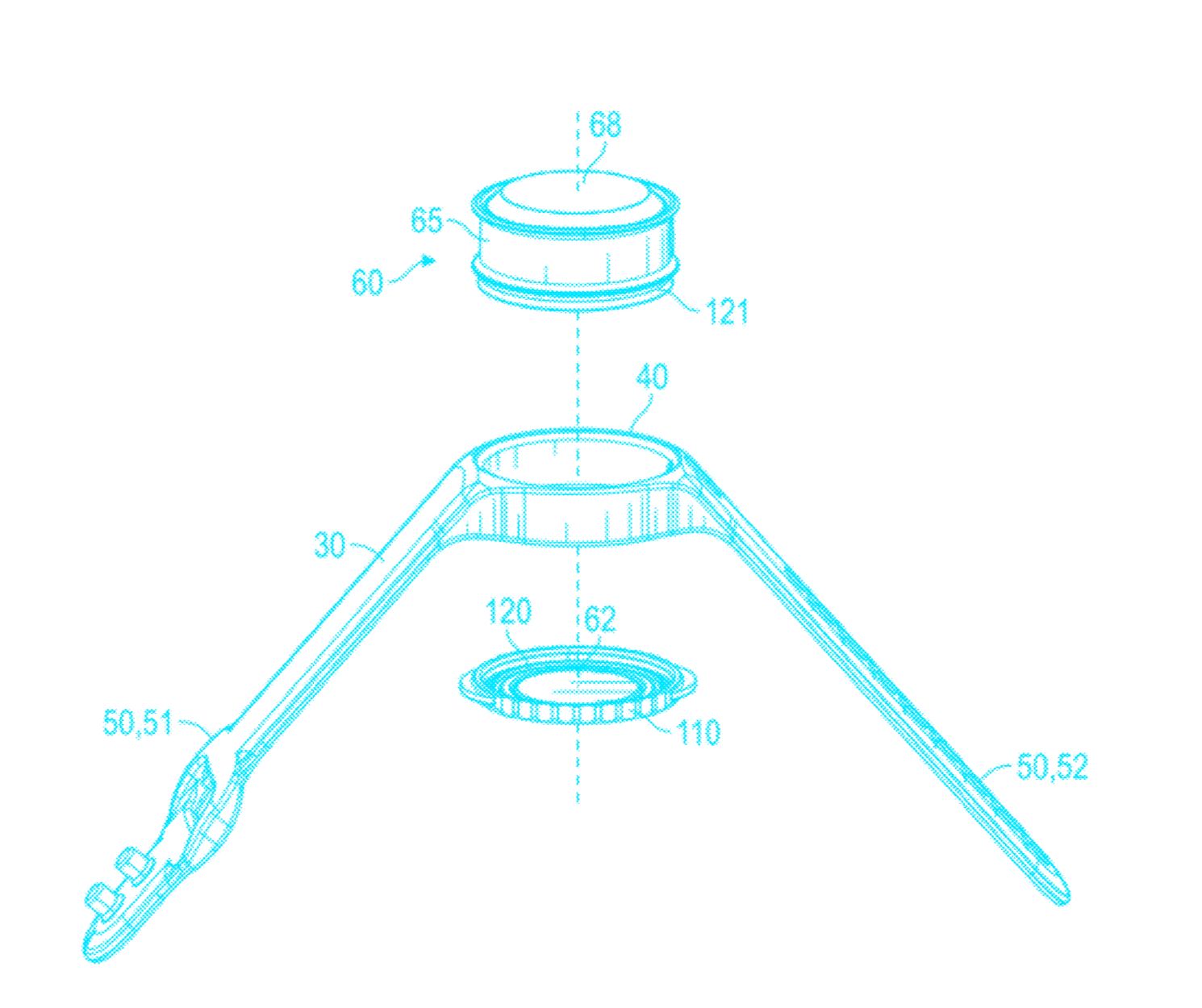
A patented, refillable wrist-worn dispenser that puts a chosen formulation, cream, serum, lotion or gel, one press away. It's in production today, not a rendering or a future promise.
Factory-sealed clinical cartridge
A proposed packaging variant of the same reservoir mechanism: a single-formulation, tamper-evident pod with no refill access, designed to snap into the band and be swapped as a whole unit for clinical hygiene use. The reservoir was engineered from day one to be removable, which is what would make this possible on the same hardware platform, but it has not yet been tooled, manufactured or reviewed for clinical use.
WearSpray IQ
An intelligence layer in development to pair personalized guidance with contextual reminders, when to apply, based on time since last use, activity and other signals a patient chooses to share.
Phone-mounted reservoir
A proposed reservoir format that rides along with a device patients already carry everywhere.
Attachable wearable pod
A proposed modular pod designed to attach to a watch band, bag strap or other everyday accessory.
These are concepts and development directions, not shipping products.
Why It Matters
A practical path from recommendation to action.
Patients
A practical path from knowing what to apply to being able to apply it, without an extra bag, an extra step or one more thing to remember.
Physicians & Clinical Programs
A way to test whether easier access changes how consistently patients follow a recommended regimen, with real usage data where patients consent to share it.
Skincare Manufacturers
Insight into how a formulation is actually used once it leaves the office, information that's hard to get once a product goes home with a patient.
A Closer Look
Supporting Aftercare Beyond the Clinic.
The gap is sharpest right after a procedure, when correct aftercare matters most and a missed step is hardest to undo.
After some dermatologic and aesthetic procedures, patients are asked to follow a specific at-home application schedule using a formulation their clinician recommends. That schedule has to compete with the rest of a patient's day, work, travel, childcare, once they leave the office. WearSpray's proposed role is narrow: pair the clinician's reminder with immediate access to that same recommended formulation, and test whether the combination helps more applications happen on time. We have not yet measured whether it does.
Research Foundation
Why Study Access and Adherence?
Three published studies, each in a different patient population, informed the design of the pilot proposed below. None of them tested WearSpray or a wearable dispenser.
In a prospective study of 40 post-laser-resurfacing patients, closed wound dressings were worn for a mean of only 2.2 days, and most patients were unwilling to continue past 48 hours, choosing to revert to simpler open-wound care rather than return to the clinic.
Population & limitation: Facial CO2 laser resurfacing patients (N=40), evaluating postoperative wound dressings, not a wearable dispenser or a topical reapplication schedule.
Outpatients given a detailed handout and video wore prescribed silicone gel sheeting for 21.8 hours a day on average, versus 10.1 hours a day with routine instructions alone, and the better-educated group also showed measurably better Vancouver Scar Scale outcomes at six months.
Population & limitation: Hypertrophic burn-scar outpatients, testing a patient-education intervention rather than a dispensing device; shows that adherence support can change both wear time and measured outcome in this population, not that WearSpray would do the same.
Reviewing controlled studies of topical acne treatment, the authors found that simple daily text-message reminders alone did not significantly improve adherence (33.9% vs. 36.5%), while weekly, more substantive engagement did improve it.
Population & limitation: Topical acne medication, reminder software only, no access or dispensing component tested; a reason to test reminders paired with immediate access rather than assume reminders alone are sufficient.
These studies do not establish that WearSpray improves adherence, healing, infection risk or cosmetic outcome for any procedure. Taken together, they establish that patients commonly stop following prescribed at-home wound-care routines well before clinicians intend, that better-supported patient education measurably changed how long a prescribed topical regimen was actually followed in one burn-scar population, and that simple reminders alone have not reliably improved adherence to a prescribed topical regimen in at least one dermatology population, part of why the pilot below proposes testing reminders paired with immediate access, not reminders alone.
Procedural Fit
Potential Research Applications.
How the concept maps against common aesthetic and dermatology procedures, shown for discussion purposes. Any regimen would remain under clinician direction, reminders are a prompt, not a replacement for prescribed instructions, and this is not a demonstrated or validated indication for any procedure.
Evidence We're Proposing to Build
A pilot designed to test one variable.
The question we want to test is narrow on purpose: does immediate, wearable access change how consistently someone follows a personalized reminder, compared with the same reminder paired with a product carried the conventional way?
Personalized reminders + conventional access
The same contextual prompts and the same clinician-specified regimen, paired with the same compatible formulation carried in a normal bottle or tube.
Personalized reminders + WearSpray access
The identical prompts and the same clinician-specified regimen, paired with the same compatible formulation available instantly from the wrist.
Proposed Measures
- Timely completion of scheduled applications
- Missed or delayed applications
- Convenience and usability
- Product consumption
- Patient experience
- Tolerability
Dispensing events and reported application are not the same as independently confirmed application, the pilot design would need to measure and report that distinction rather than treat a dispense or a self-report as proof the formulation was actually applied.
This pilot has not been run. Partner outcomes described anywhere on this page are proposed, not established, and no clinical claim is implied by describing it.
Practice Economics
Keeping refills with the practice.
Practices commonly report losing a meaningful share of post-procedure topical reorders to third-party retailers once a patient leaves the building. The concept calls for an automated low-reservoir prompt that routes a refill back to the prescribing practice rather than a general marketplace, which could help with both patient retention and recapturing revenue otherwise lost to attrition. These are planning assumptions for discussion with practices, not measured outcomes from a deployed program.
Built on Issued Patents
Not a concept from scratch.
This explores a new application of hardware that already exists. U.S. Patent No. 12,285,084 B1, Claim 13, covers the sensing and micro-fluidic dispensing architecture behind it, and the physical platform, Safe Band Pro , is already in production with a refillable reservoir, breathing valve and adjustable band. Extending it into a closed clinical cartridge would be a new packaging and sourcing effort built on existing hardware, it has not been tooled, manufactured or reviewed for clinical use, and any clinical deployment would still require its own regulatory and clinical review, as noted below.
Ways to Work Together
Four ways to collaborate.
Clinical Validation
Run a structured pilot alongside your own patients or research program to help build real evidence for whether accessible delivery changes adherence.
Licensing
License the dispensing platform, or specific patented mechanisms within it, for use inside your own branded formulations or devices.
Product Development
Co-develop a branded dispensing format built around your formulation, your packaging and your patients' routines.
Technology Integration
Plan an integration of WearSpray IQ's in-development reminder logic with your own app, loyalty program or patient portal.
WearSpray is not a cleared medical device, and nothing on this page should be read as a clinical claim, a treatment recommendation, or a promise of outcomes for any procedure or regimen. Research referenced above comes from published, independently cited studies in different patient populations, not a WearSpray-run study, and does not establish that WearSpray improves adherence, healing, infection risk or cosmetic outcome for any procedure. Clinical deployment of the ideas described here would require appropriate regulatory review, professional clinical oversight, and formal evaluation before use with patients. This page exists to start a conversation with dermatology, medical aesthetics, skincare manufacturing and clinical research partners, not to describe a finished or approved product.